
What Makes Stargazing in Spiti Valley So Special?
Spiti leaves a strong impression during the day. The roads climb through dramatic landscapes, monasteries appear on hilltops, and villages seem to emerge from the mountains themselves.
Then the sun goes down.
The colours disappear, the temperature drops, and the valley becomes remarkably quiet. What was a landscape a few hours ago becomes a sky.
For many visitors, some of the most memorable moments in Spiti happen after dark.
Why the Sky Feels larger at Spiti ?
The sky in Spiti often looks larger than expected. Part of it comes from the geography. The valley sits at a high altitude, the air is dry, and there is less pollution compared to cities. The result is a night sky that feels unusually clear.
Stars that struggle to compete with city lights suddenly become easy to spot. Constellations appear sharper. The longer you look, the more details emerge. It isn’t something that reveals itself all at once. Your eyes adjust, the darkness settles in, and gradually the sky becomes crowded with points of light.
When Darkness Becomes Part of the Experience
In most places, darkness simply signals the end of the day. In Spiti, it often feels like the beginning of something else. There are evenings when conversation naturally slows down because everyone is looking in the same direction. The mountains fade into silhouettes and attention shifts upward.
The silence plays a role too. Without traffic, city noise, or bright surroundings, the experience becomes surprisingly immersive. Even a short walk outside can feel completely different from what most people are used to.
Can You See the Milky Way in Spiti Valley?
Yes, and on clear nights it can be spectacular.The Milky Way is usually most visible when the moonlight is limited and the sky remains clear. During the right conditions, the bright band stretching across the sky becomes visible to the naked eye.
Photographs often capture the detail more dramatically, but seeing it in person feels different. There is a sense of scale that cameras rarely communicate.
Many visitors arrive hoping to photograph the Milky Way and leave talking about how it looked without a camera.
The Best Seasons for Stargazing in Spiti
Different seasons bring different experiences.
Summer
Summer combines comfortable weather with relatively easy road access. Nights are cooler than the daytime temperatures suggest, making a warm jacket useful even during peak travel months.
Autumn
Autumn often brings crisp air and stable conditions. The landscapes begin to change colour, tourist numbers start to reduce, and the nights feel especially clear.
Winter
Winter offers some of the clearest skies of the year. Snow-covered landscapes and long nights create a completely different atmosphere. The trade-off is the cold, which becomes a significant part of the experience.
What to Carry for a Night Under the Stars
Stargazing doesn’t require expensive equipment, but a few simple items make the experience far more comfortable. A warm jacket is usually the first requirement. Even summer nights can become cold once you’re standing still for long periods.
Other useful items include:
- Gloves during colder months
- A torch or headlamp
- A thermos with a hot drink
- Comfortable footwear
- A tripod for photography
A little preparation allows you to stay outside longer, which is often when the night sky becomes most rewarding.
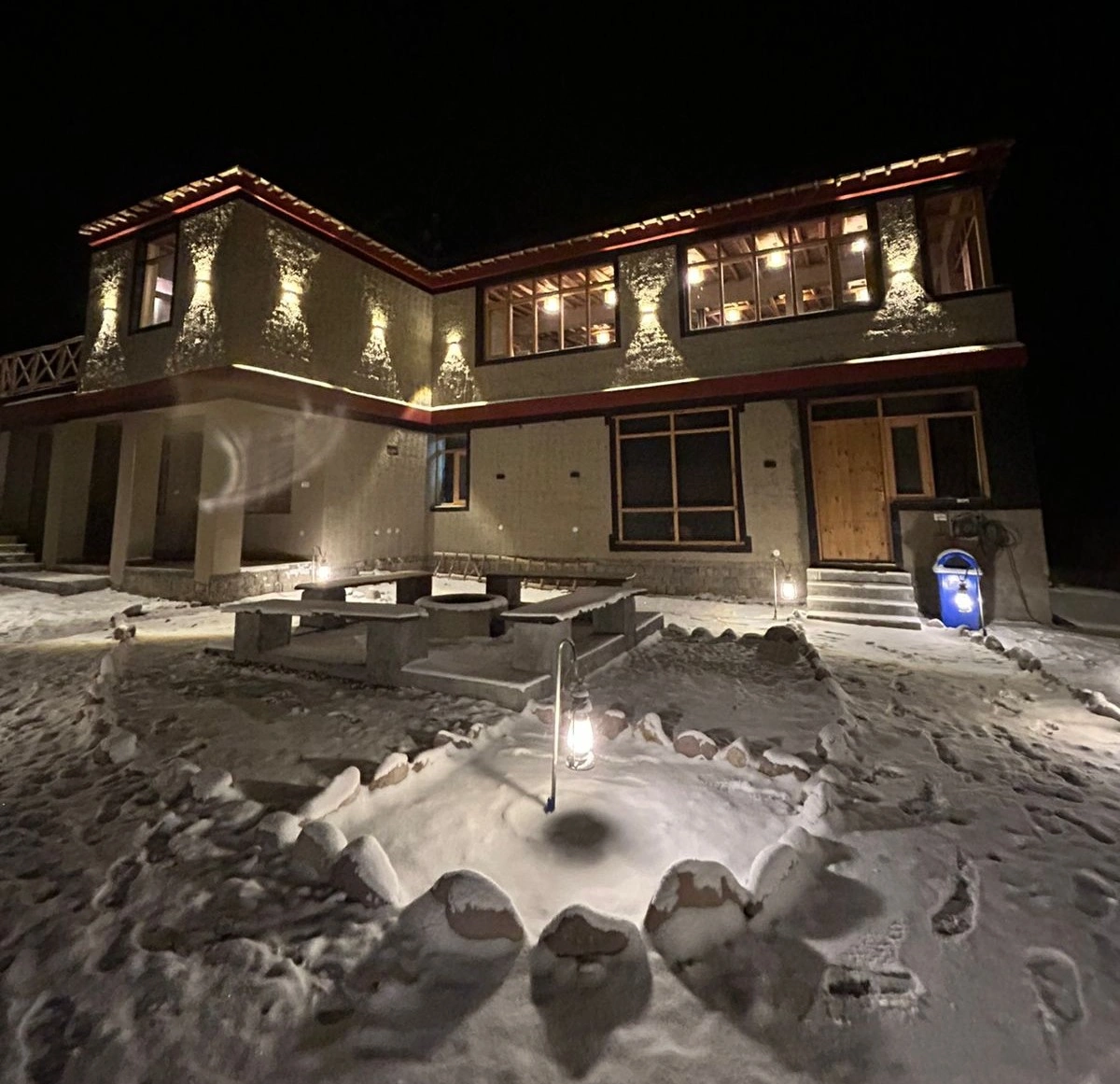
Stargazing and Astrophotography
Spiti has become increasingly popular with photographers interested in night skies. The combination of dark surroundings, mountain landscapes, and clear conditions creates opportunities that are difficult to find near larger towns and cities.
Patience matters more than equipment. A stable tripod, extra batteries, and a willingness to spend time outside usually make a bigger difference than carrying the latest camera gear.
Why Your Location Matters
The quality of the night sky often has less to do with equipment and more to do with where you are standing.
Areas with fewer surrounding lights naturally offer a better view of the stars. Open surroundings make a noticeable difference, especially when you’re hoping to experience the sky rather than simply photograph it. A quiet evening, a clear horizon, and a little distance from concentrated lighting can transform an ordinary night into something far more memorable.
The Kind of Night You Remember Long After the Trip
Spiti has no shortage of famous attractions. People return with photographs of monasteries, mountain roads, and high-altitude villages. Yet some memories don’t come from a destination marked on a map.
They come from standing outside after dinner, looking up for a few minutes, and staying there far longer than planned. The stars are part of the reason.
The silence is the other.
Frequently Asked Questions
Is Spiti Valley good for stargazing?
Yes. High altitude, dry air, and minimal light pollution make Spiti one of the most rewarding places in India for night-sky viewing.
Can you see the Milky Way in Spiti Valley?
Yes. On clear nights with limited moonlight, the Milky Way is often visible to the naked eye.
Which month is best for stargazing in Spiti?
Late summer and autumn are popular choices because of clear skies and comfortable conditions, though winter can offer exceptional visibility as well.
Do I need a telescope for stargazing in Spiti?
No. Many of the most impressive views can be enjoyed without any specialised equipment.
What should I wear for stargazing in Spiti?
Warm layers are recommended throughout the year, as temperatures drop significantly after sunset.
Is stargazing better away from towns?
Generally, yes. Fewer artificial lights help improve visibility and create a more immersive experience.
Can beginners enjoy stargazing in Spiti?
Absolutely. No prior knowledge of astronomy is required to appreciate the night sky in the valley.